LiquidTrust™ is a payments innovation company serving financial institutions, B2B platforms, and SMBs globally.
This series began with a simple change in international trade: technology is making it easier for SMBs to find opportunities around the world.
But finding an opportunity and completing a transaction are two different things.
Throughout this series, we have followed what happens in between. Businesses need to verify who they are working with, agree on payment terms, decide how risk will be shared, and protect the transaction when greater confidence is needed – including having a defined process for addressing disputes when something does not go as planned.
In our previous article, Conditional Payments and Micro Escrow®: A Practical Way to Protect B2B Transactions, we explored how those steps can come together through conditional payment.
Taken together, they point to a broader opportunity: trust infrastructure.
What Is Trust Infrastructure?
Trust infrastructure is the connected systems and processes that help businesses establish who is involved, what was agreed, when payment should move, and what happens if something changes.
For an international B2B transaction, that can include:
- Business and counterparty verification
- KYB and compliance checks
- Clear transaction terms
- Verified payment information
- Conditional payment
- Evidence of delivery of goods or completion of services
- Transaction records
- Dispute and exception processes
None of these capabilities is new on its own.
What is changing is the opportunity to bring them together.
Why International Trade Needs More Than Faster Payments
Digital technology has made it easier to discover international buyers and suppliers and move money across borders.
But faster payment does not answer every question surrounding the transaction.
That gap has real consequences for SMBs. More than a quarter (27%) are hindered from expanding globally by the complexity and risks of current cross-border payment systems, while one-third have experienced failed or late cross-border payments that can damage relationships with critical suppliers.
Before committing money, goods, services, or other resources, businesses still need to know:
- Who am I doing business with?
- What exactly have we agreed to?
- When should payment move?
- What confirms that the condition has been met?
- What happens if something goes wrong?
These questions become especially important when two SMBs are doing business for the first time.
As we explored in How Trust Risk in Business Is Evolving from Local to Global, international commerce increasingly asks businesses to establish trust without the local relationships and familiarity that once supported many commercial transactions.
The next phase of digital trade needs to address that gap.
From Separate Tools to a Connected Transaction
Today, an SMB may verify a business in one place, negotiate terms over email, make payment through another system, track delivery or completion elsewhere, and manage a disagreement manually.
Each step may work.
The problem is that the transaction itself becomes fragmented.
A more connected approach brings the important pieces together:
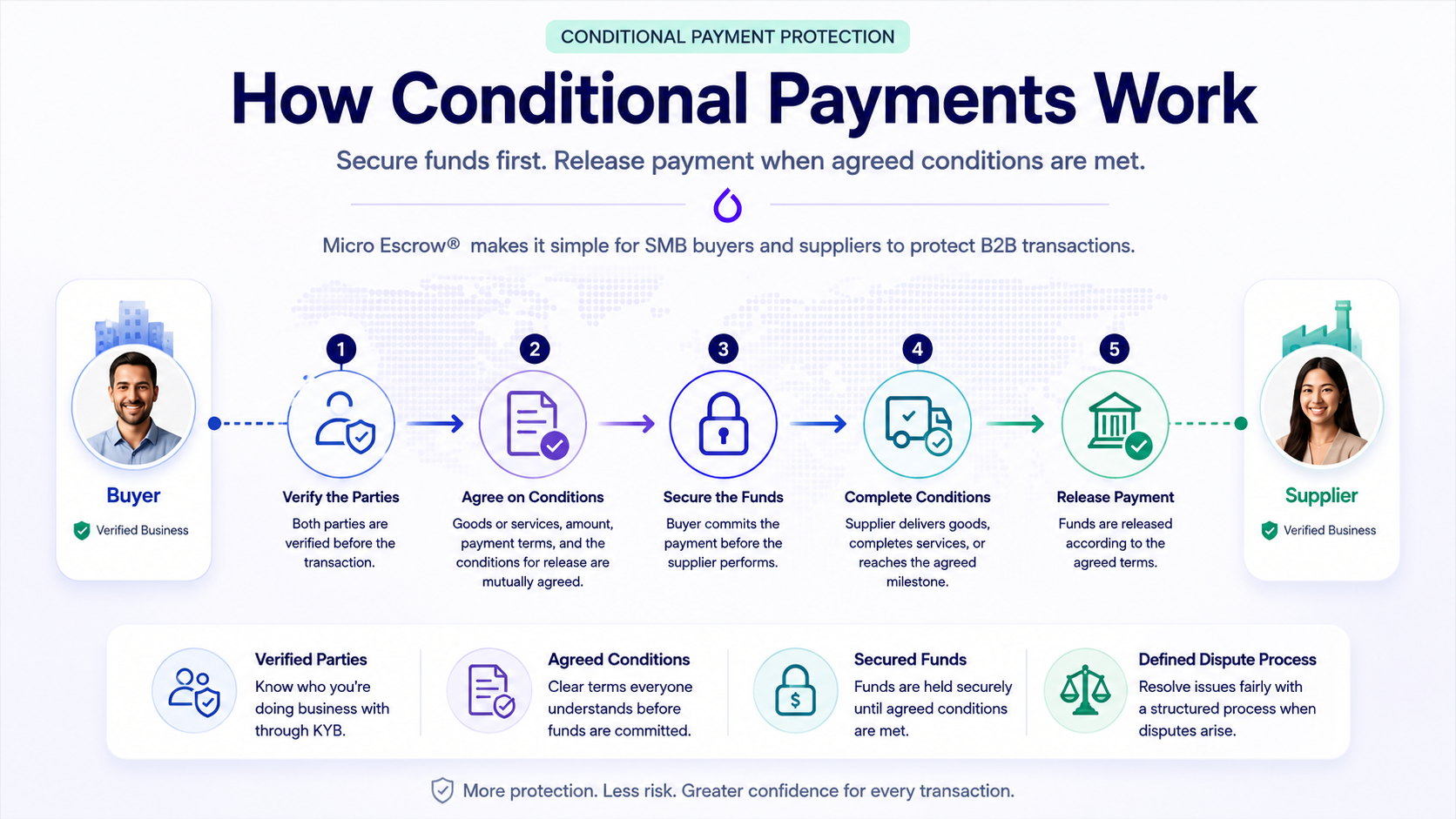
Verify the business → Agree on terms → Secure the funds → Complete the goods or services condition → Release payment
That is the same transaction journey we have followed throughout this series.
A Practical Guide to Verifying a New International Buyer or Supplier addressed who is involved.
Know Your Business (KYB): What SMBs Should Know Before They Trade explained how verification can become a repeatable process.
Choosing Payment Terms for Your First International Transaction addressed how risk should be shared.
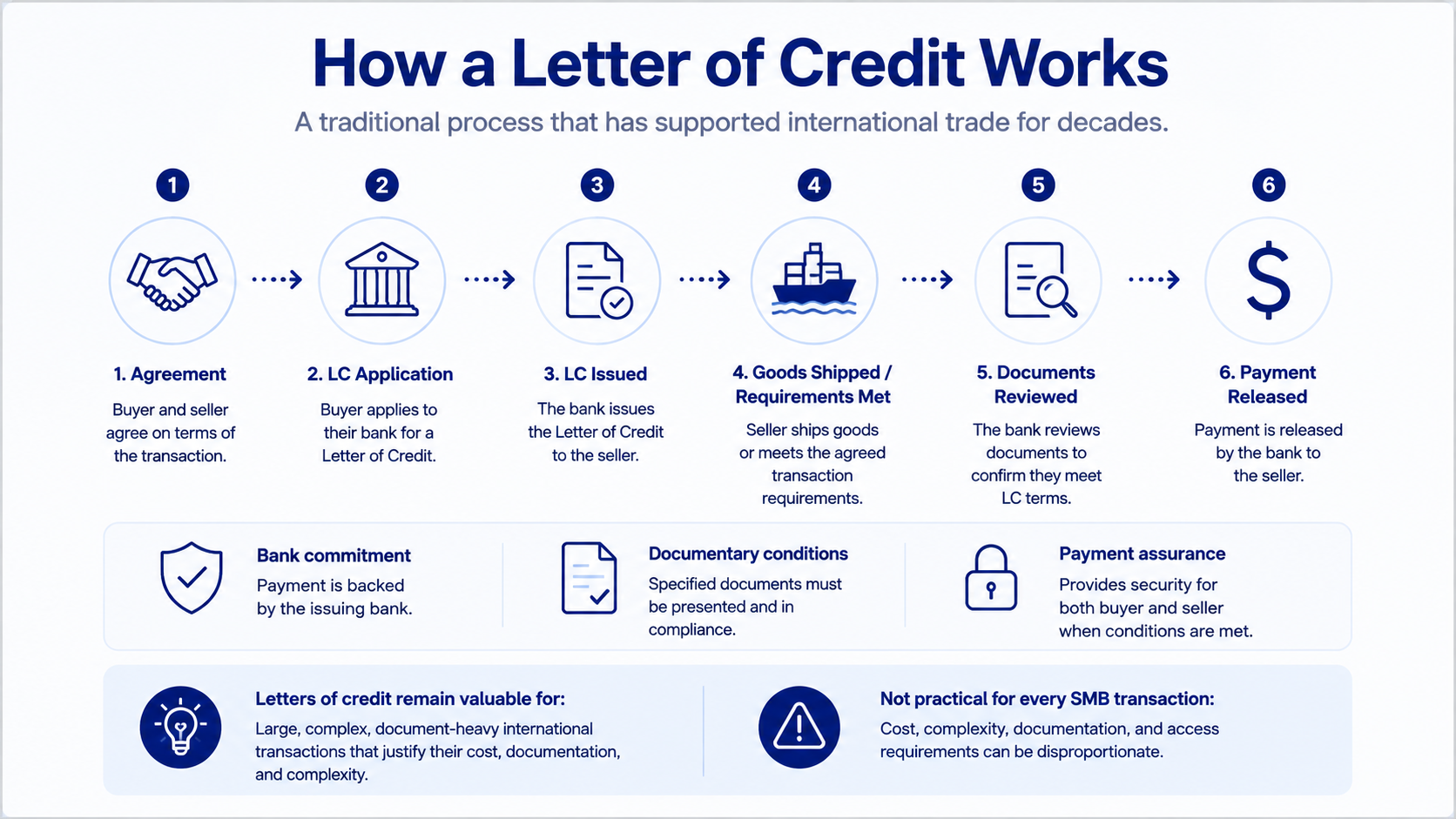
Beyond Letters of Credit: Modern Transaction Protection for SMBs and Conditional Payments and Micro Escrow®: A Practical Way to Protect B2B Transactions then addressed how those terms can be protected in practice.
Trust infrastructure connects those decisions instead of leaving SMBs to manage each one separately.
What This Could Mean for SMBs
Large companies have traditionally managed international transaction risk through banks, trade finance teams, procurement departments, compliance specialists, and legal resources.
Most SMBs do not have that infrastructure.
Technology creates an opportunity to make more of those capabilities accessible without requiring an SMB to build the expertise itself.
That does not mean every transaction needs the same level of protection.
A routine payment between established partners may require very little additional structure.
A first-time cross-border transaction involving meaningful value may require verification, secured funds, clearly defined conditions, and a dispute process.
The infrastructure should adapt to the transaction.
Where LiquidTrust Fits
This is the problem LiquidTrust is working to solve.
Micro Escrow® connects counterparty verification, agreed transaction conditions, secured funds, payment release, transaction records, and a defined dispute process through a more structured transaction experience.
For a buyer, that can mean not having to send funds directly to an unfamiliar supplier before the agreed goods or services condition is completed.
For a supplier, it can provide confidence that the buyer has committed the funds before work begins.
And because the model is digital, it can support transactions that may not justify the cost or complexity of traditional trade finance.
The goal is straightforward: make transaction protection more practical and accessible for the businesses participating in global trade.
The Next Chapter of Global Trade
AI, digital marketplaces, and other technologies will continue making international opportunities easier to discover. And SMB appetite for international business is already strong: 75% of SMEs already making cross-border payments say they plan to do more business internationally.
Payments will continue becoming faster and more digital.
But discovery and payment alone do not create trusted commerce.
Businesses also need practical ways to establish who is involved, define what must happen, protect payment, and manage what happens when a transaction does not proceed exactly as expected.
That is why trust infrastructure matters.
This series began with technology helping SMBs find international opportunities.
It ends with the infrastructure that can help them complete those opportunities with confidence.
The future of international trade is not only about connecting more businesses.
It is about helping those businesses trust the transactions that connect them.
Key Takeaways
- Trust infrastructure connects verification, transaction terms, payment protection, evidence, records, and dispute processes.
- SMBs can benefit from access to transaction protections that have traditionally been easier for larger businesses to manage.
- The appropriate level of protection should reflect the relationship, transaction value, and risks involved.
- Micro Escrow® can connect verification, secured funds, agreed conditions, and payment release through one transaction process.
- As global trade becomes easier to discover and execute digitally, trust can become part of the infrastructure supporting it.
Learn more about Micro Escrow®.