LiquidTrust™ is a payments innovation company serving financial institutions, B2B platforms, and SMBs globally.
Throughout this series, we have followed an international transaction from finding a business through verification, payment terms, and transaction protection.
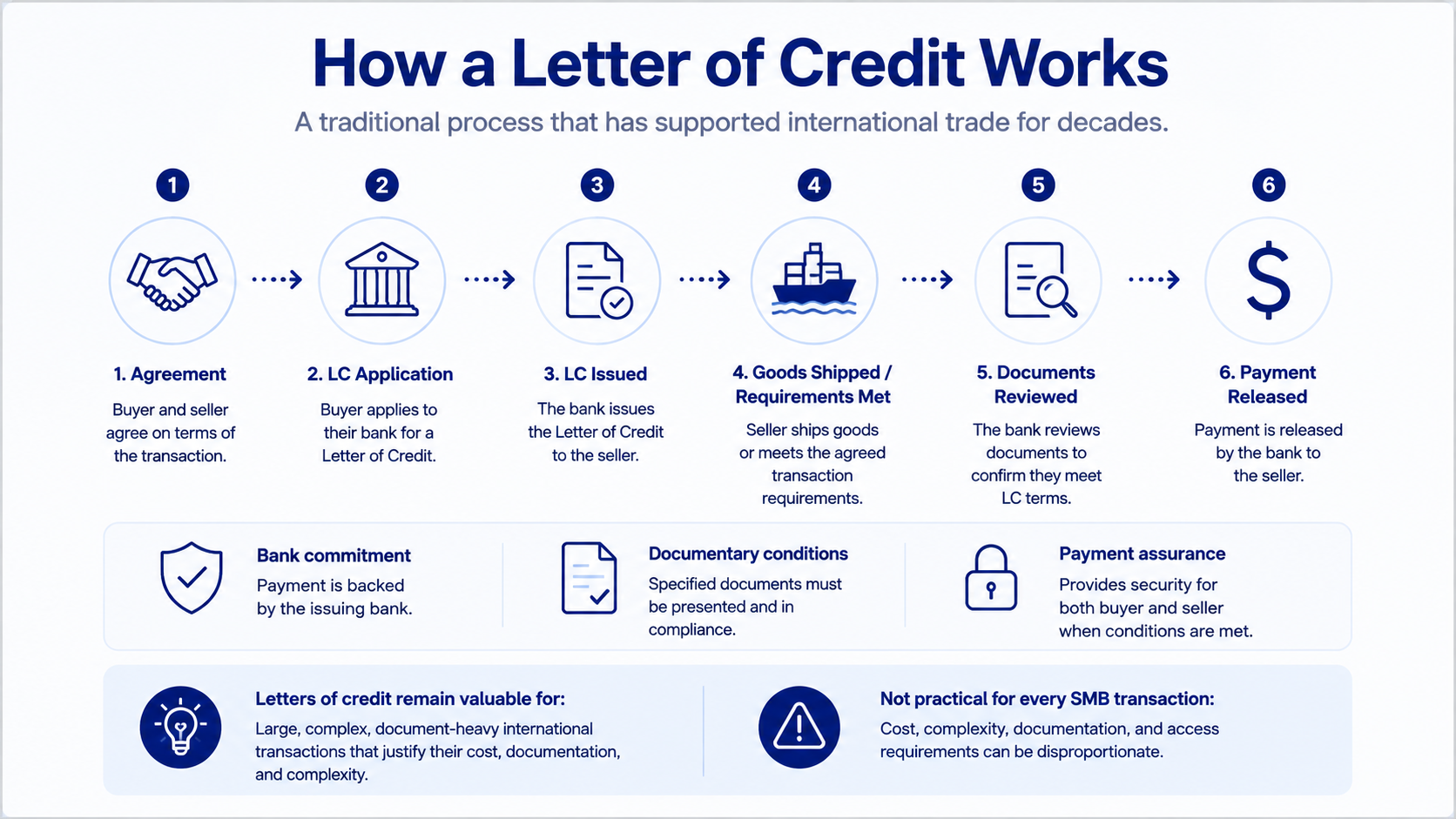
In our previous article, Beyond Letters of Credit: Modern Transaction Protection for SMBs, we explored the gap many SMBs face when they need transaction protection but traditional trade-finance tools are not practical. Full prepayment can expose the buyer, open-account terms can expose the supplier, and traditional letters of credit may be too complex, costly, or difficult to access.
Conditional payment provides another option.
What Is a Conditional Payment?
A conditional payment connects the release of funds to something the buyer and supplier have agreed must happen first.
That condition might be:
- Shipment of goods
- Delivery of goods
- Completion of services
- Completion of a milestone
- Document uploads
- Inspection of goods/services
- Acceptance of goods/services
- Anything the 2 parties agree
Instead of one party taking most of the risk, both sides know what must happen before payment is released.
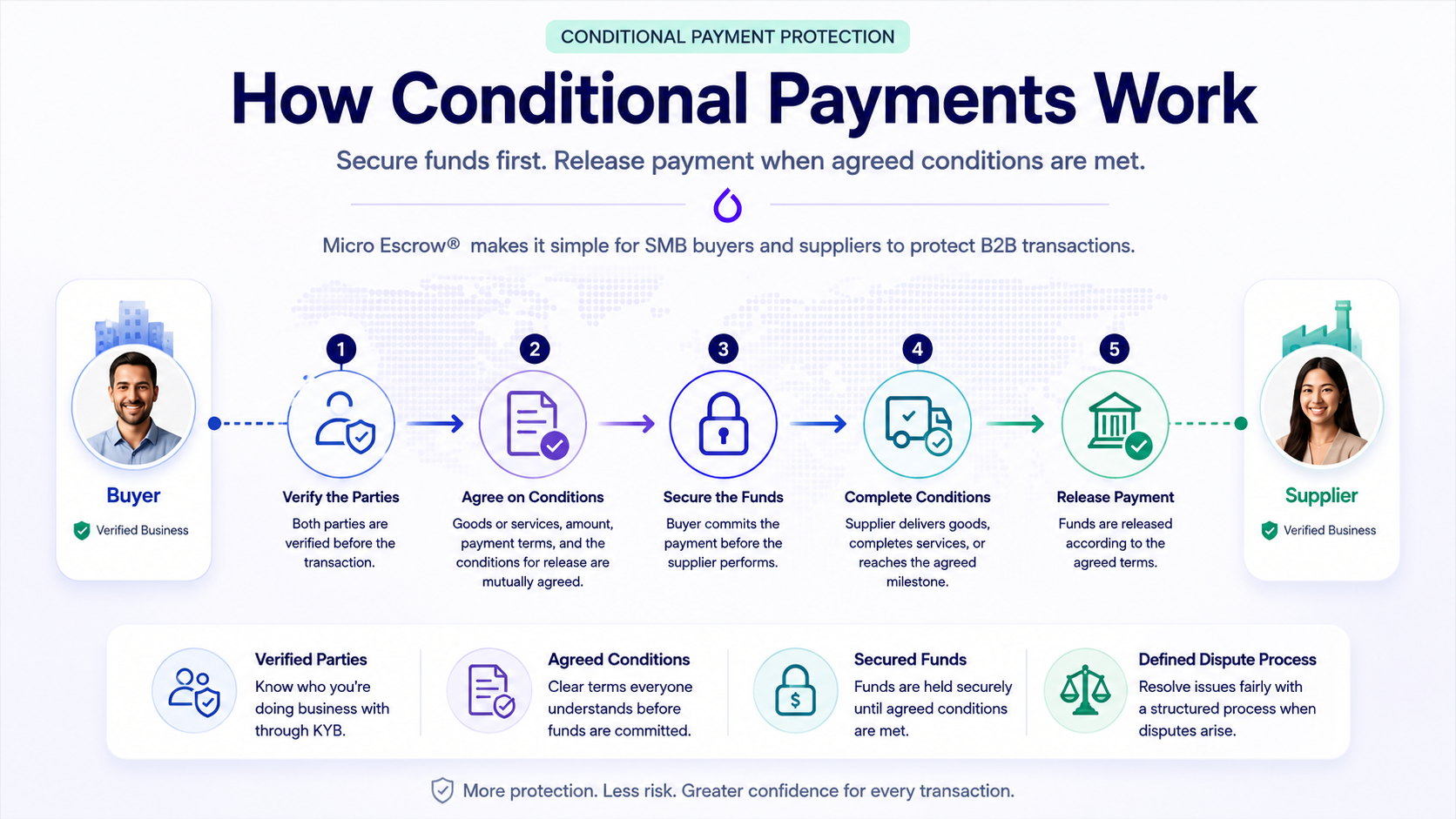
How Micro Escrow® Works
LiquidTrust's Micro Escrow® is designed to make conditional payment practical for B2B transactions.
The basic process is straightforward:
- Verify the parties. Both sides are verified before the transaction takes place. Know Your Business (KYB) helps businesses understand who they are transacting with.
- Agree on the conditions. The two parties mutually agree on the goods or services being exchanged, the amount, payment terms, and the conditions that must be met before funds are released to the payee.
- Secure the funds. The buyer commits the payment before the supplier performs.
- Complete the condition(s). The supplier delivers the goods, completes the services, or reaches the agreed milestone.
- Release payment. Funds are released according to the agreed transaction terms.
The buyer does not have to send payment directly to an unfamiliar supplier upfront. If they do not receive what they agreed, they know the funds will be returned to them.
The supplier knows the buyer has committed the funds. If they provide the goods or services and meet all the mutually agreed conditions, they know they will be paid in full.
Why This Can Work for SMB Transactions
Traditional letters of credit rely heavily on banks, documents, and formal trade-finance processes.
Micro Escrow® takes a different approach by connecting secured funds directly to the conditions of the transaction.
That can be useful for:
- First-time buyer and supplier relationships
- Cross-border transactions
- Goods or services
- Custom orders
- Project milestones
- Inspection or acceptance periods
Not every transaction requires this protection. Established businesses making routine payments may be comfortable paying directly.
The value is having another option when the transaction requires more protection but traditional trade finance is more than the businesses need.
More Than Holding Funds
Protecting a transaction also requires clarity about who is involved, what was agreed, and what happens if something changes.
Micro Escrow® can bring together:
- Counterparty verification
- Agreed transaction conditions
- Conditional holds
- Payment release
- Transaction records
- A defined dispute process
If the parties disagree about whether the agreed conditions have been met, the transaction has a defined process for addressing the dispute rather than leaving the buyer and supplier to resolve the payment issue entirely on their own. The parties can first work to resolve the issue directly, with an additional dispute-resolution process available when needed.
That structure can also help keep costs more practical. Rather than paying upfront for an intermediary to manage every transaction, the additional dispute-resolution step is only needed when a dispute actually occurs.
This matters because these are the same issues we have followed throughout this series.
A Practical Guide to Verifying a New International Buyer or Supplier covered who you are doing business with.
Know Your Business (KYB): What SMBs Should Know Before They Trade explained how verification becomes a repeatable process.
Choosing Payment Terms for Your First International Transaction addressed how both sides agree to share risk.
Micro Escrow® helps put those decisions into practice.
From Opportunity to Protected Transaction
Technology is making it easier for SMBs to find international opportunities.
The harder question is how to complete those transactions when the buyer and supplier do not yet have an established relationship.
That is the journey this series has followed:
Find the opportunity → Verify the business → Agree on terms → Secure the funds → Complete the goods or services condition → Release payment
The goal is not to eliminate every transaction risk.
It is to give both sides a clearer, more practical way to move forward.
Learn more about Micro Escrow®.
Key Takeaways
- Conditional payments connect payment release to agreed transaction conditions.
- Micro Escrow® can protect buyers from premature payment while giving suppliers confidence that funds have been committed.
- The model can support goods, services, milestones, inspection, and acceptance.
- Verification, payment conditions, transaction records, and dispute processes can work together through one transaction process.